
The 15-Minute Mastery: How to Train When You Have No Time
From Funakoshi’s secrets to Tamang Shihan’s compact routine: Why consistency beats intensity and how to make every day a training.

Welcome to the Dōjō. To find specific technical drills or philosophy essays, visit our Master Index. Full access to our Japan-grade masterclasses and technical archives is reserved for our Premium Members.
I guess this is a big topic for many people who want to practice something and make progress, yet feel they don't have enough time in their everyday lives to truly commit to regular training.
In my Dōjō, every year I meet people who tell me, “I would really love to get involved and improve in Karate, but I don't have enough time in my life to do so, especially with my job and all the other commitments I have.”
My answer is always the same: “I understand, and feel free to join whenever you can. Even if you can't follow an entire class, it's better than not coming at all.”
And invariably I hear the final response: “You know, if I commit to Karate, I really want to be able to dedicate myself to training very regularly. If I can't make that commitment, I'd rather not come at all.”
I have to say I never understand this perspective—how can no training be better than some training? And I'm convinced that all these “I can’t” are actually disguised excuses for some “I don't have the courage.”
But I'm always ready to change my mind!
The reason I'm talking to you about this today is that I'm currently facing concerns about the amount of time I can devote to training myself.
Since I first started Karate at 17, there was never any question of stopping or even slowing down my training. In fact, this idea never crossed my mind. Karate practice has always been the most important thing in my life, always coming before everything else. Even in the middle of chaos, even when I was down with a knee on the ground, stopping training was never an option. Most importantly, I can say that Karate saved my life and helped me navigate very tough and painful situations.
If you really love something, why stay away from it? Why not try to manage your life—and that passion—so you can continue your practice on your way to mastery?
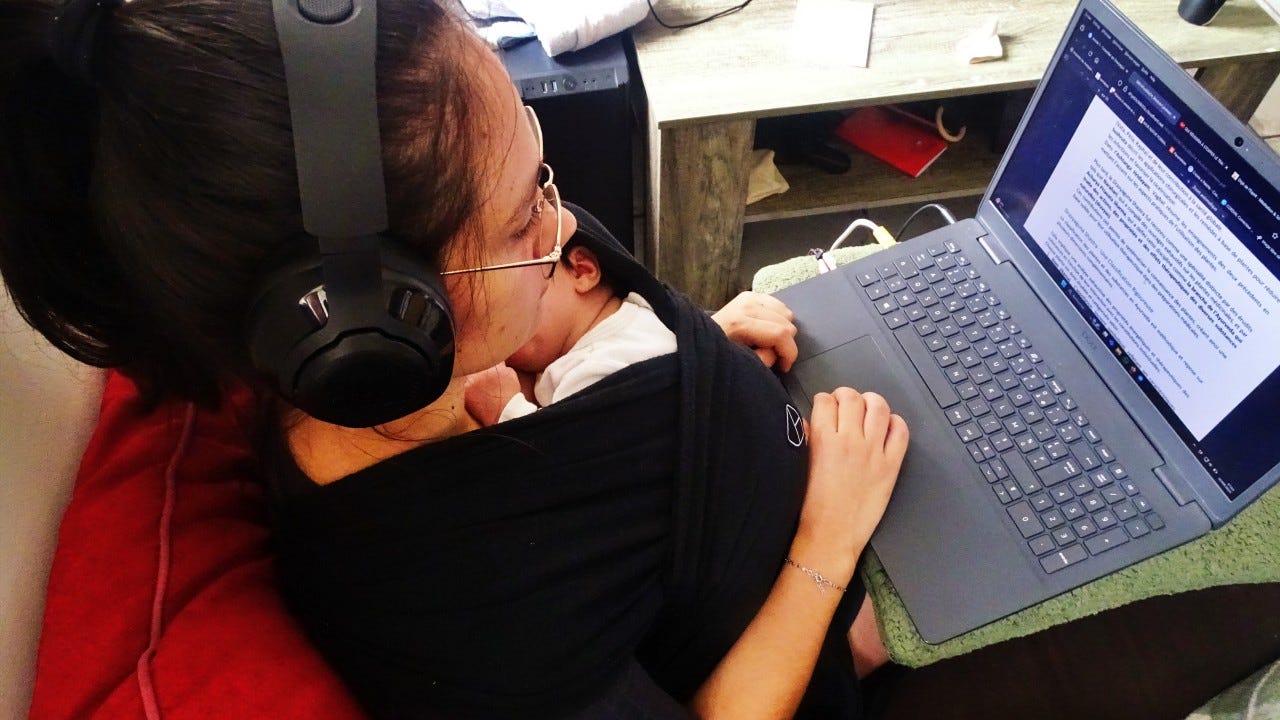
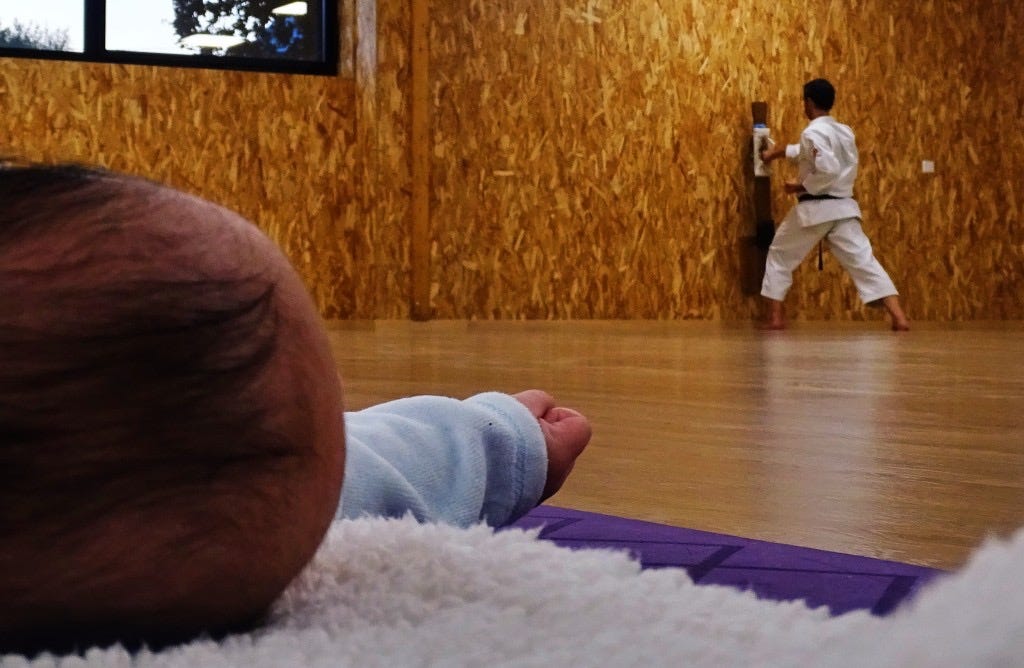
As you may know, my sweet Louise and I recently received the most beautiful gift from the universe: a newborn baby. We're both involved in Karate and Yoga training, and we both have businesses to run—IT for me, Ayurveda and massage therapy for Louise. With the attention, time, and energy we want to give our child, it's becoming very difficult to commit to a daily 1.5-2 hour practice. In fact, finding even one hour of calm where we can focus solely on our practice has become almost impossible.
A few years ago, this would have been a major issue for me, as my mentality in Karate was: train, train, and train some more. Whether you’re feeling high or low, you train. Practice was always the answer, and I was educated in martial arts to always put training first—I mean rough, intense, daily training. I believed that the more you train, the more you progress... The more time you dedicate to your practice, the further you’ll go on your journey.
But that’s not always true.
In fact, time isn’t always the most relevant factor in making progress.
So, is this lack of time really a problem for me and my training today? The answer is no. Karate teaches us to adapt and never give up. In Kumite, as in life, we must always adapt ourselves to the situation and the opposing forces we encounter.
I’m fortunate to have had great Senseis and mentors who taught me how to deal with such situations and continue improving even when you feel you can’t dedicate enough time to training. So, I’d like to share their wisdom and my experience with you today.
Does that sound good to you?
Five minutes is better than no minutes
When I first read Funakoshi Sensei’s masterpiece, “The Essence of Karate”, I was almost shocked to discover he believed you could improve in Karate by practicing just 10-15 minutes a day!
And when you think about it, it’s totally logical and makes perfect sense! For our skills, progress, confidence, and well-being, it's obviously better to train a little than not to train at all. Practicing and rehearsing for fifteen minutes will certainly help your progress by creating new training habits, slowly building your body, and strengthening the neural pathways necessary to develop the coordination required to perform techniques properly! So, training a little is always better than not training at all.
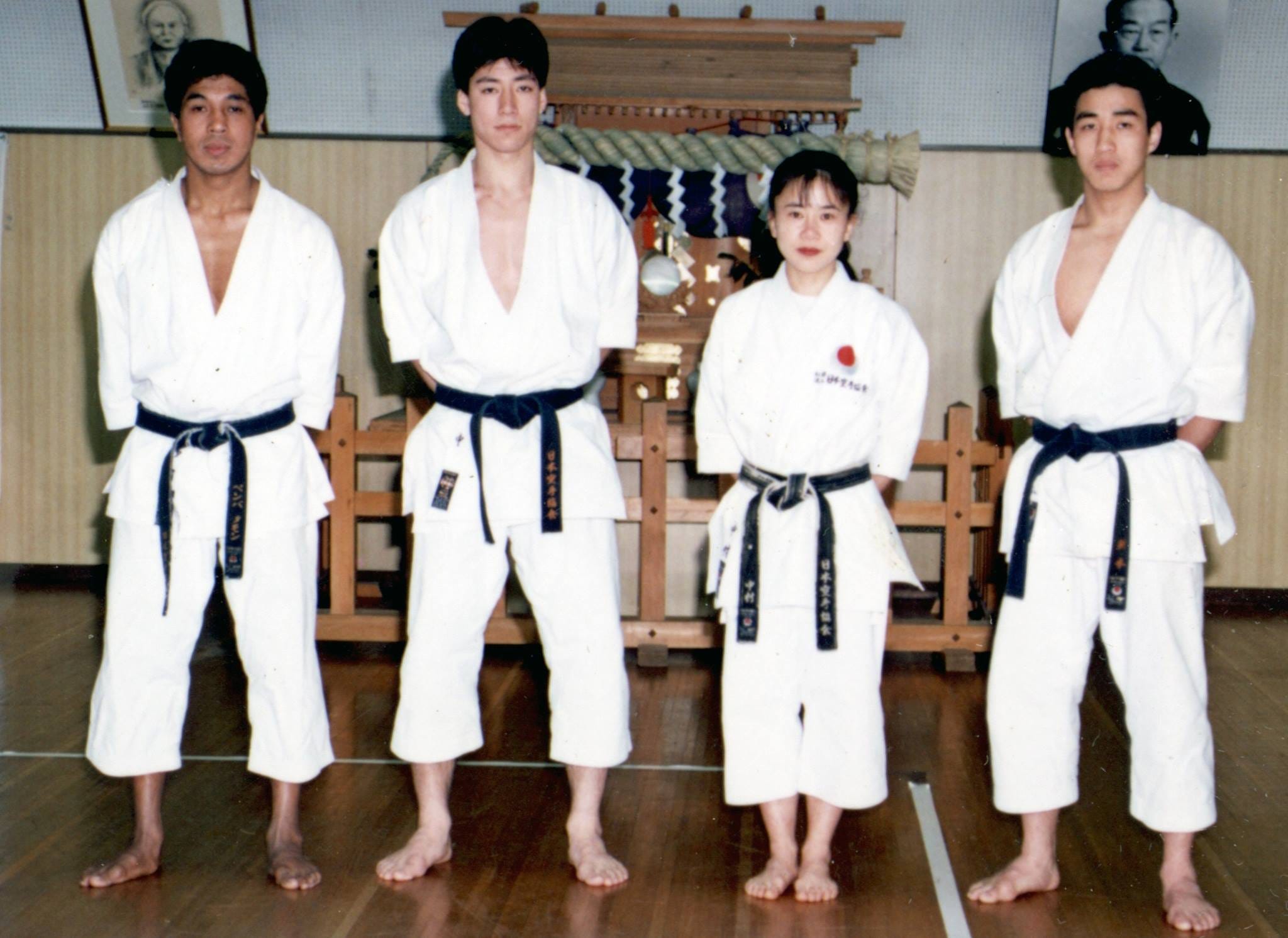
My Sensei in Japan, Pemba Tamang Shihan, also surprised me greatly with his unique approach to managing training time while balancing the necessities of everyday material life with the hard and rigorous training he was devoted to. During the years he spent in Tokyo before enrolling in the JKA Kenshusei program, when he faced financial challenges—struggling to pay rent and buy food—he didn't simply reduce his training frequency. Instead, he temporarily stopped attending JKA Hombu Dojo classes altogether. During that time, he dedicated himself to various jobs to earn enough money to become financially stable again. Once he had saved enough, he would quit his work and return to attending Dojo classes twice a day, seven days a week, devoting himself entirely to training for at least six months.
But during those several months of earning money, was he not training at all? Actually, no. He had developed a one-hour compact self-training routine that he practiced in public parks three times a week, which contained all the most important and essential elements needed to continue progressing in Karate. I was fortunate that he shared this training routine with me, which I've been using ever since when I don’t have enough time for full regular Karate practice. And I must say, it’s incredibly effective! What I can tell you in a few words is that this training focuses on creating speed and building power that can be directly applied in Kumite—which, when you think about it, is the main purpose of Karate training... It has to work!
As I mentioned earlier, when I learned all this more than 20 years ago, I couldn’t really understand or accept it, as it was so far removed from the “never give up” education I had received from my previous Senseis in France.
It wasn’t how my operating system worked! For me, the only key to progress and skill development was dedication. And dedication equaled time spent—I mean time spent sweating and relentlessly repeating our Kihon, Kata, and Kumite. I believed that whatever our external conditions might be, we must keep going and keep training harder.
In a way, that’s true. But time isn't always synonymous with quality. In fact, it often isn't, especially in today’s hustle culture that constantly pushes us to work harder and do more, without really taking the essential time to think about what we want and how to make it a reality.
Time is not always the most important factor in success, skill acquisition and progress.
Intention is the real key to progress
Practicing mindfully for five minutes is better than practicing for one hour with fractured focus.
This isn't a scientific statement—even though I'm sure it could easily be demonstrated—but an observation from my own long training and teaching experience.
Karate—and this is of course true for many other practices—is not only a physical discipline. Of course, having a strong, flexible, and relaxed body is key to good Karate, but it’s not enough. Otherwise, a yoga practitioner, gymnast, or dancer could immediately become a good karate-ka. And that’s not the case—far from it. So progress and skill in Karate cannot be achieved through physical training alone. I would even say that physical progress is often the byproduct of training we do in other areas of this art.
We often tend to forget the mindful part and repeat like robots.
Therefore, Karate is not like running or other purely physical practices—I’m not saying there are no other dimensions in these sports, but you understand what I mean, right? You can’t really make progress without being truly present in your practice. The physical part—strength, flexibility, power, and speed—is only the tip of the iceberg, and actually the easiest part. For all these aspects, you simply repeat and improve.
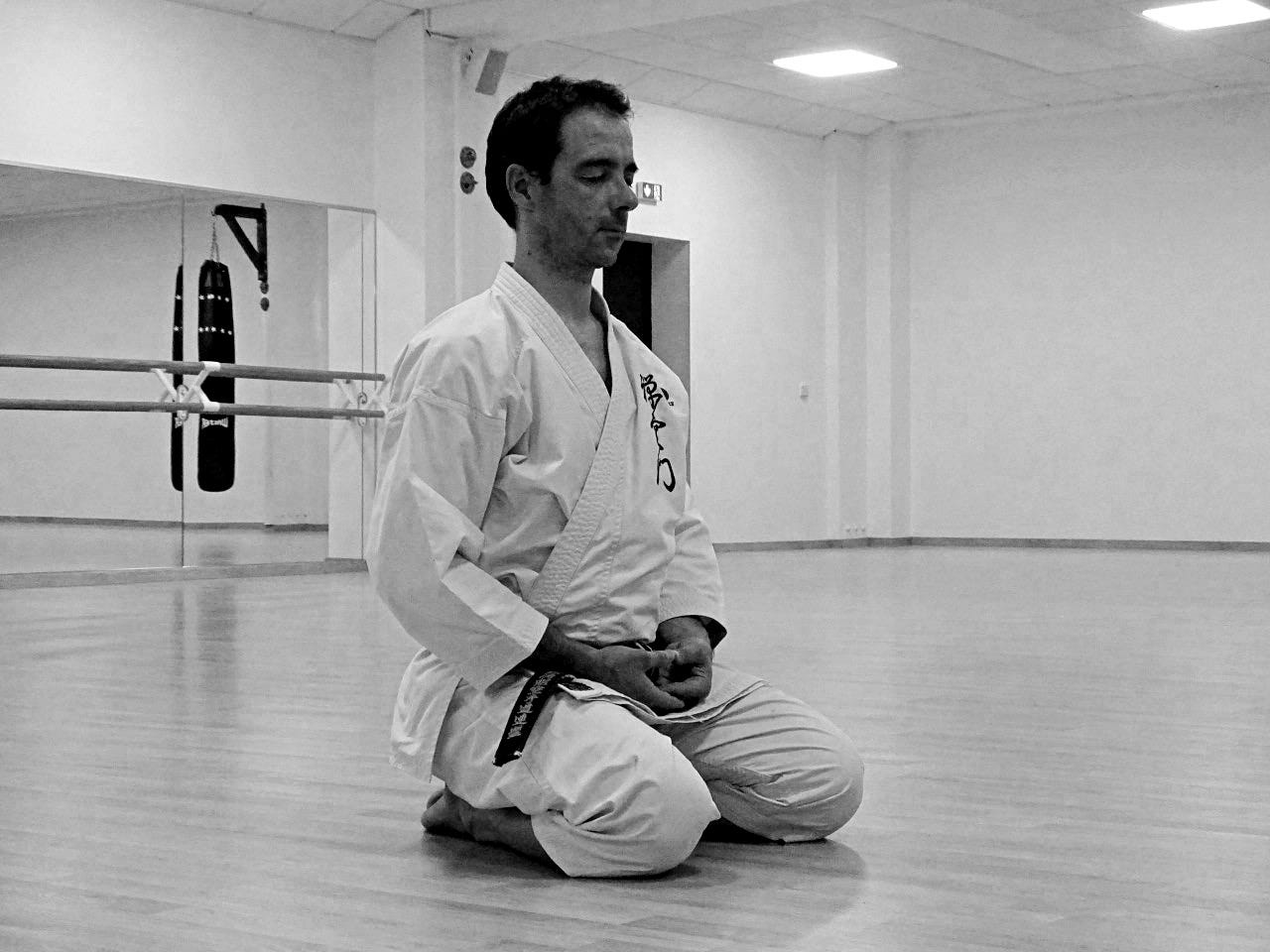
But other sides of the practice—like timing, Kime, space & time management, control, adaptation, and creativity—all require you to be fully present in your training, to use 100% of your capacity to test, apply, react, and adjust. And to improve these skills, you don’t necessarily need long and physically demanding training sessions. Moreover, when we practice such long and intense training, we often tend to forget the mindful part and repeat like robots. (This can be good sometimes, especially to build resilience, courage, and fighting spirit, but we need to practice other skills to have truly complete Karate.)
Also, as I've already explained and experienced firsthand, sometimes you train very hard for long periods but see other people taking it more easily while still improving more than you do.
If you’d like to learn more, check out the following article where I share my personal experience on the subject!

So, why?
Because they truly know why they’re there, why they repeat and rehearse all these techniques in the Dōjō. Their intention is crystal clear to them, and that changes everything. This is especially true if your own intentions aren’t totally clear, if you’re experiencing confusion, fatigue, or weariness. In that case, the “never give up” spirit isn’t always the best way to handle this period—it can actually lead you even further down.
To get the most from your training, you first need to build unshakable clarity.
When I truly understood this from within, it completely changed my Karate life and skill level. Putting very clear intention into every step I took inside the Dōjō totally changed the pace of my progress, and my overall Karate level increased dramatically in just a few weeks!
And of course, this applies to every area of your life, which is why my motto since then has been:
“Put meaning and intention into each of your breaths.”
Think about it—this is a simple but life-changing mindset.
Building the mindset is the first step. But how do you practically implement this in a schedule that’s already full? Below, I share the specific tactics I use to maintain progress in 15 minutes, and how you can design your own 'Micro-Dōjō' anywhere. Unlock this guide and the full Yūshin Geiko system by becoming a Premium Member.
